Virtual Physiology

the unique truly simulation software


physiology and pharmacology experiments
in virtual laboratories
almost like in the real world
- Perfect for online teaching and remote learning -

sachin a billion dreams hdhub4u

The 2017 documentary Sachin: A Billion Dreams explores the life and career of legendary Indian cricketer Sachin Tendulkar . Directed by James Erskine

Ultimately, the film is about the journey of a dream. It reminds us that behind the helmet and the pads was a human being who dared to dream big. Whether you are a die-hard cricket fanatic or a casual moviegoer, Sachin’s story is a lesson in dedication, humility, and the relentless pursuit of excellence.

The screenplay masterfully captures the burden of expectation. It highlights the mid-90s, a tumultuous time in Indian cricket history. The film poignantly portrays the years when Tendulkar was the lone warrior in a fading team, focusing heavily on the physical and mental toll the sport took on him. His back injury, the devastating loss of his father during the 1999 World Cup, and the captaincy struggles are depicted with raw honesty.

For those searching for the film on platforms like , it is important to note that this is a film that relies heavily on visual detail. The contrast between the grainy 90s Doordarshan footage and the slick, high-definition interviews creates a compelling timeline of technological and personal evolution. Watching a pixelated version on a piracy site often strips away the meticulously crafted sound design—the roar of the crowd at Sharjah or the silence of the Wankhede Stadium before the winning shot in the 2011 World Cup final.

"HDHub4u" context
Sachin A Billion Dreams Hdhub4u May 2026

running on all Windows platforms,
from Win 7 to Win 11, 32 bit as well as 64 bit versions
without any specific requirements (see Technical Specifications)

including platform-independent Online Versions
for experiments via the Virtual Physiology server
existing so far for SimHeart and SimVessel
with beta-versions of SimMuscle and SimNeuron

SimHeart©

SimHeart offers a virtual laboratory for recordings of heart contractions in the Langendorff set-up in response on the most relevant transmitters and drugs, including a drug laboratory for the adjustment of the appropriate solutions.

Featured experiments:

  • Effects of Adrenaline and Acetylcholine on frequency and amplitude of heart contractions (inotroph and chronotroph effects)
  • Effects of competitive receptor blockers Propranolol and Atropine
  • Aadrenaline dose-response curve and its shift by the ß-blocker Propranolol (competitive inhibition)
  • Comparison with non-competitive inhibition by the Ca2+-channel blocker Verapamil
  • Strengthening of the contractions by the heart-glycoside g-Strophantine
  • Induction and treatment of arrhythmias and heart blocks in systole and diastole

SimVessel©

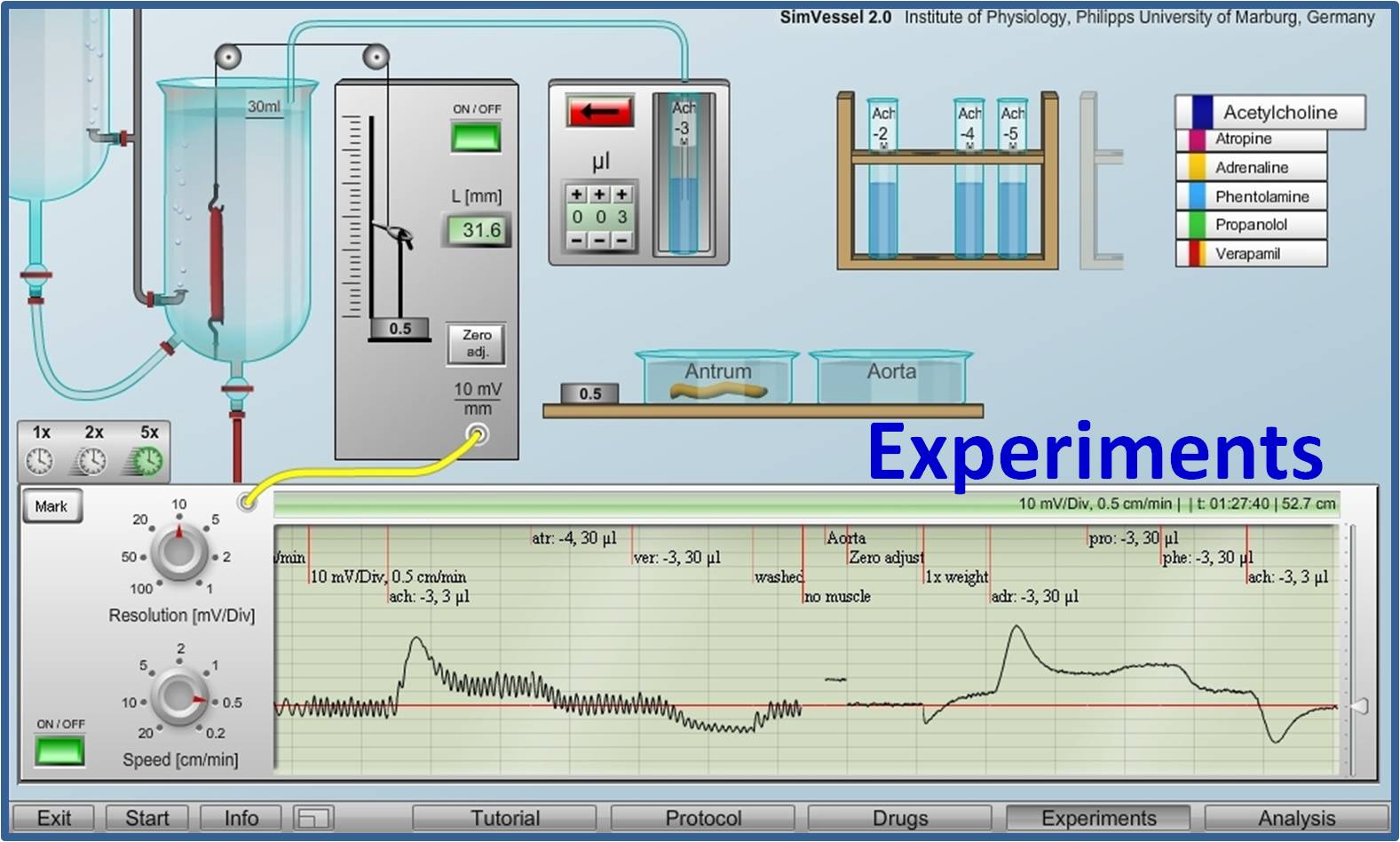
SimVessel offers a virtual laboratory for the examination of smooth muscle contractions of vessels and the intestine.
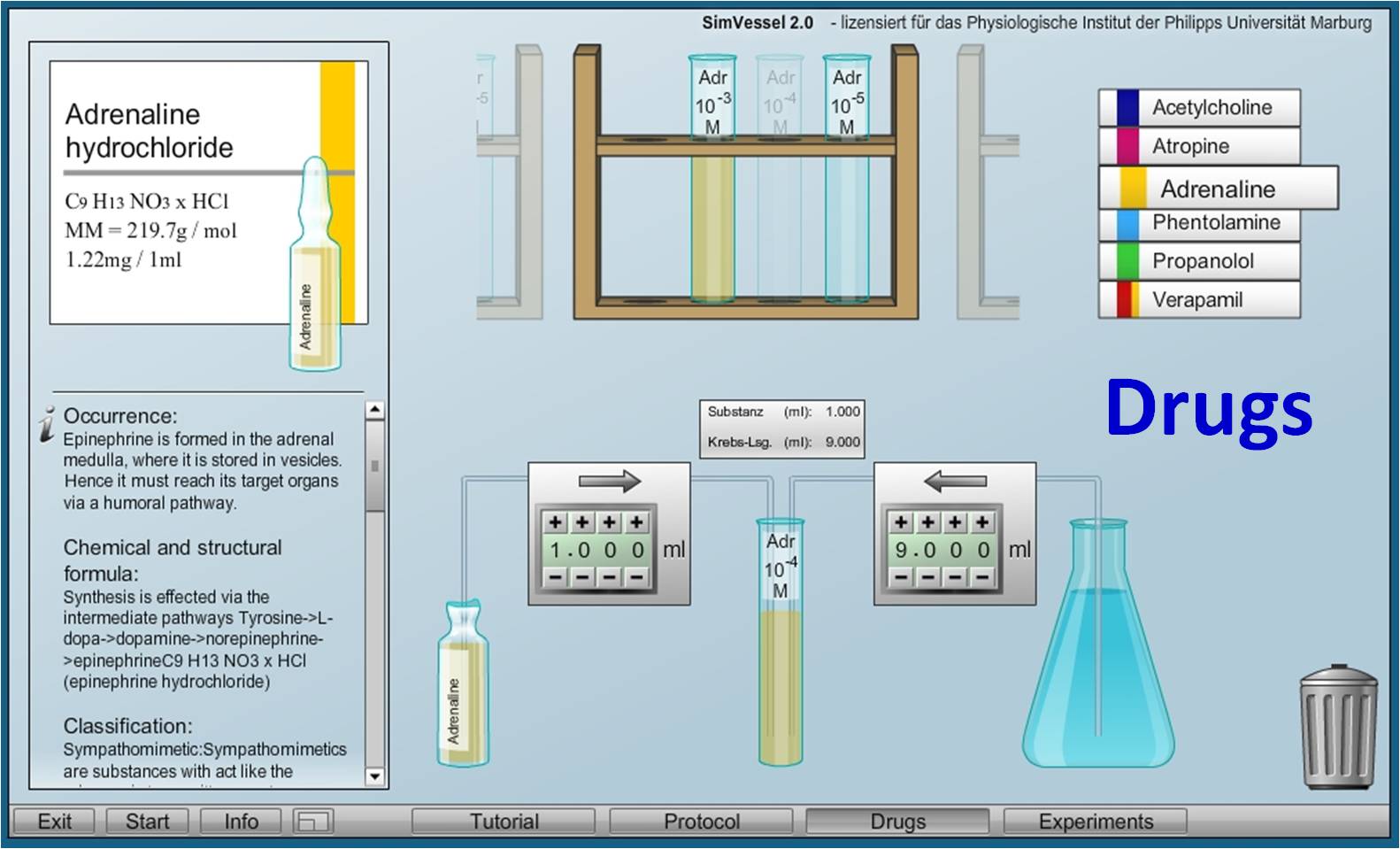
The experiments can be done with muscle stripes, placed in an organ bath to which physiologically relevant signal substances and widely used drugs can be added. Preparing the appropriate dilutions can be trained, as in SimHeart, in a drug laboratory.

Featured experiments:

  • Comparison of phasic and tonic smooth muscle contractions.
  • Illustrating the effects of muscle stretching (Bayliss effect)
  • Demonstrating opposite reactions of vessels and intestine on Adrenaline and Acetylcholine
  • Examining the effects of the cholinergic receptor antagonist Atropine
  • Comparing the effects of adrenergic α- and β-receptor antagonists (Phentolamine and Propranolol)
  • Illustrating the effects of the Ca2+-channel blocker Verapamil
  • Recording of dose-response curves of Adrenaline and Acetylcholine
  • Demonstrating alterations of dose-response curves by competitive and non-competitive inhibitors

SimMuscle©

SimMuscle offers a fully equipped, realistically appearing laboratory on the computer screen to perform classical experiments with isolated nerve-muscle preparations of the frog.
All stimulation and recording parameters of the virtual devices are freely adjustable. Mathematical algorithms guarantee for the appropriated reactions of the virtual muscle, also considering the biological diversity of the preparations.

The virtual “SimMuscle” laboratory contains two nerve-muscle preparations and all the apparatus that you will need for experimentation in a simplified but quite realistic form.

When entering the lab you first need to switch on all the devices (POWER buttons). Then drag one of two already prepared nerve-muscle preparations from the Petri-dish to hang it in the suspension apparatus. This includes a mechano-electrical converter transforming changes of either the muscle force or muscle length, selectable by a toggle switch, into an electric potential. You can pre-stretch the muscle hanging one or more weights in the loop at which the muscle is fixed.

Muscle contractions are induced by current pulses delivered from a stimulation apparatus to the electrodes on which the nerve is placed. Stimuli as well as muscle contractions are displayed on a dual beam storage oscilloscope, appropriately displayed with accordingly adjusted voltage amplification and time base (via the rotary switches) and zero lines. Single or double pulses as well as trains of stimuli of selectable amplitude and intervals can be applied.

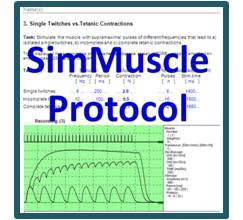
The example shows muscle contractions, here changes of the muscle length, in response to different trains of voltage pulses inducing isolated twitches, incomplete and complete tetanic contractions depending on the intervals in which the pulses are applied.

Featured experiments:

  • Single twitches and their stimulus dependencies (recruitement of motor units)
  • Superposition of single twitches, tetanic contractions, resting tension curves (pre-stretching)
  • Curves of isometric and isotonic maxima, muscle fatigue

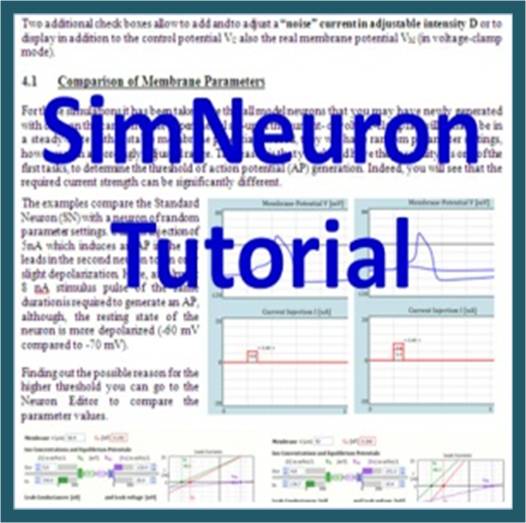
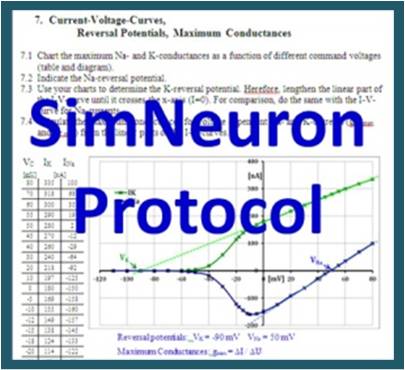
for details see Tutorial and Protocol form

For your own experiments you can download
a fully functioning DEMO Version

Sachin A Billion Dreams Hdhub4u May 2026

The 2017 documentary Sachin: A Billion Dreams explores the life and career of legendary Indian cricketer Sachin Tendulkar . Directed by James Erskine

Ultimately, the film is about the journey of a dream. It reminds us that behind the helmet and the pads was a human being who dared to dream big. Whether you are a die-hard cricket fanatic or a casual moviegoer, Sachin’s story is a lesson in dedication, humility, and the relentless pursuit of excellence.

The screenplay masterfully captures the burden of expectation. It highlights the mid-90s, a tumultuous time in Indian cricket history. The film poignantly portrays the years when Tendulkar was the lone warrior in a fading team, focusing heavily on the physical and mental toll the sport took on him. His back injury, the devastating loss of his father during the 1999 World Cup, and the captaincy struggles are depicted with raw honesty.

For those searching for the film on platforms like , it is important to note that this is a film that relies heavily on visual detail. The contrast between the grainy 90s Doordarshan footage and the slick, high-definition interviews creates a compelling timeline of technological and personal evolution. Watching a pixelated version on a piracy site often strips away the meticulously crafted sound design—the roar of the crowd at Sharjah or the silence of the Wankhede Stadium before the winning shot in the 2011 World Cup final.

"HDHub4u" context

SimNeuron©

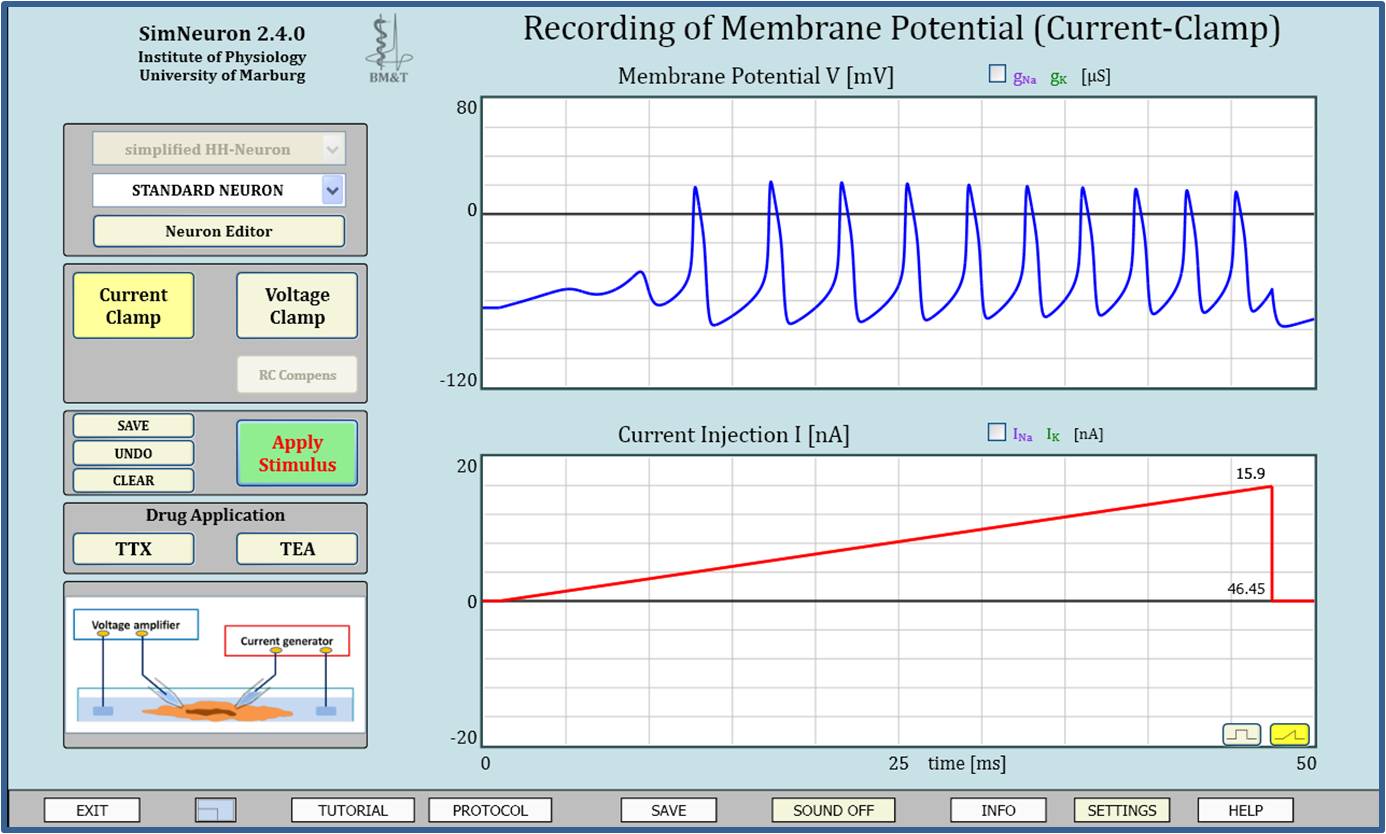
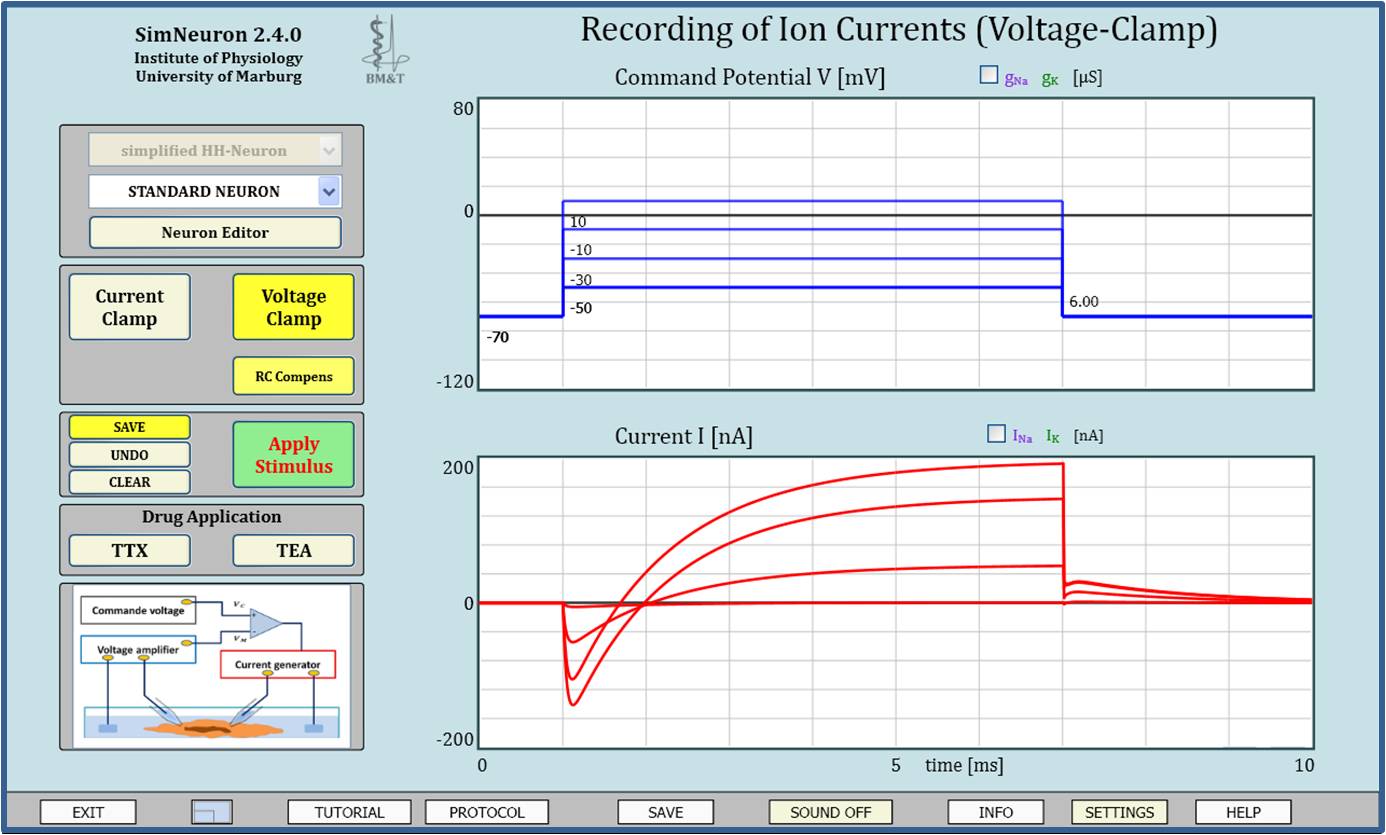
SimNeuron offers virtual laboratories for voltage- and current-clamp experiments in an easy to overlook lab design

  • towards a better understanding of the relations between ion currents and action potential generation
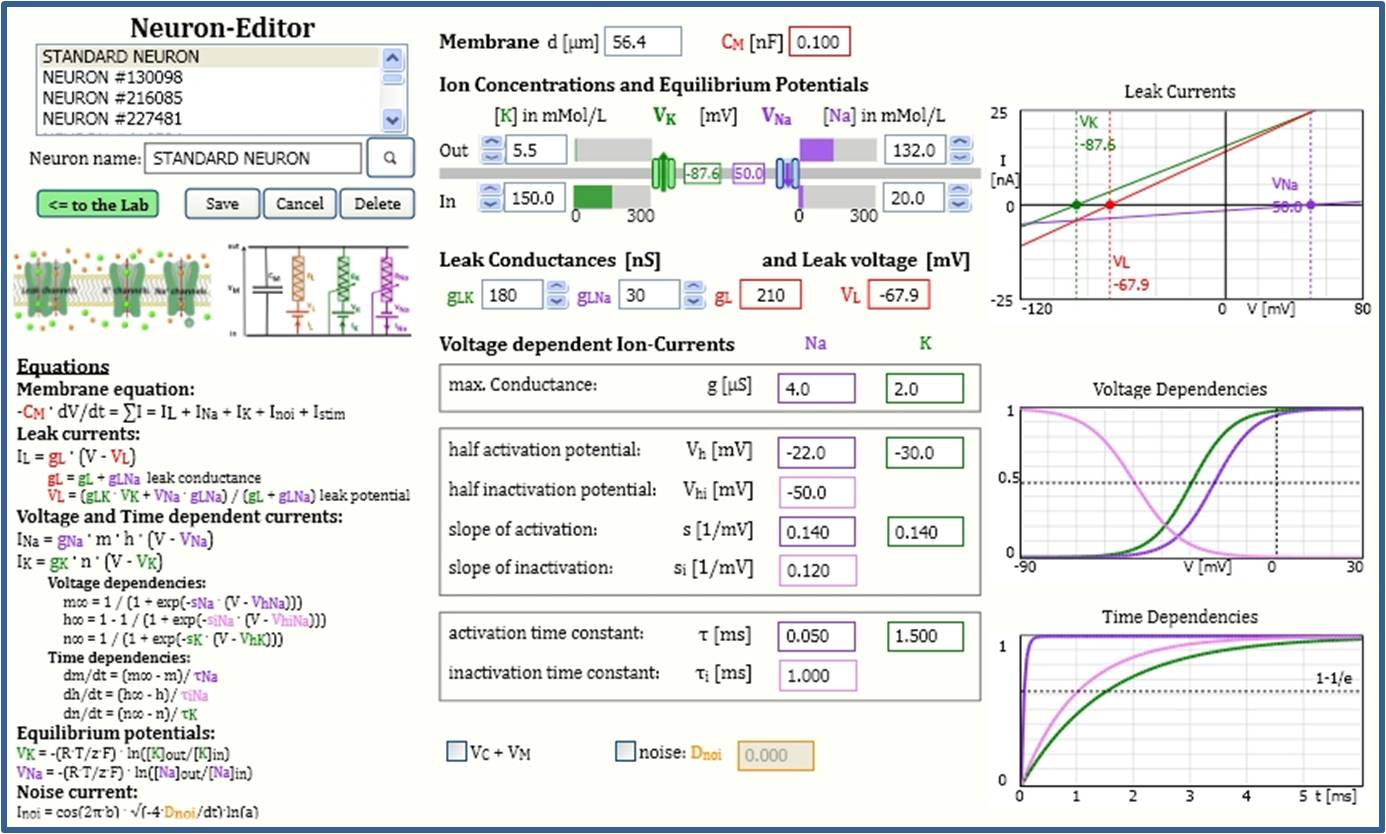
  • including a neuron editor showing the full set of the neuron parameters

Featured experiments:

  • Determine the threshold of action potential generation in thecurrent-clamp lab
  • Examine the effects of amplitude and duration of the current stimulus
  • Induction of a series of action potentials of different frequencies
  • Comparison of action potentials with local potentials and purely passive potential changes
  • Understanding the effects of the Na-channel blocker TTX and K+-channel blocker TEA
  • Display and explain the alterations of ionic conductances and currents during an action potential


  • Recordings of ion currents in the voltage-clamp lab with and without RC compensation
  • Application of the Na+-channel blocker TTX and K+-channel blocker TEA
  • Estimation of the activation (and inactivation) time constants
  • Determining the reversal potentials of Na+- and K+-currents. (tail currents)
  • Constructing current-voltage (I-V) curves and calculation of the voltage dependencies of ion channel activation

For the experts:

  • Use the Neuron Editor to examine the effects of different membrane parameters on the neuron’s sensitivity, e.g. with alterations of voltage- and time-dependencies of ion current activation and inactivation, leak conductances, ion concentrations, etc.

  • Examine how a neuron at constant resting potential can be transferred into a pacemaker neuron.

Pre-Settings:

In fully licensed versions there is the possibility to select to which specific features of the program the students shall have access. This can be done in so-called pre-settings window which you can open from the labs via the SETTINGS button in the switch bank. In demo versions the pre-settings are fixed with most functions enabled. Whether you are a die-hard cricket fanatic or